


You must be logged in to post a review.
ID: 25022
Categories: Muscle Growth & Performance Peptides, Peptides for Research
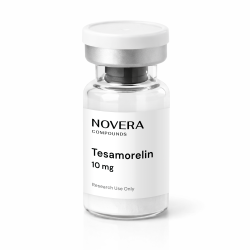
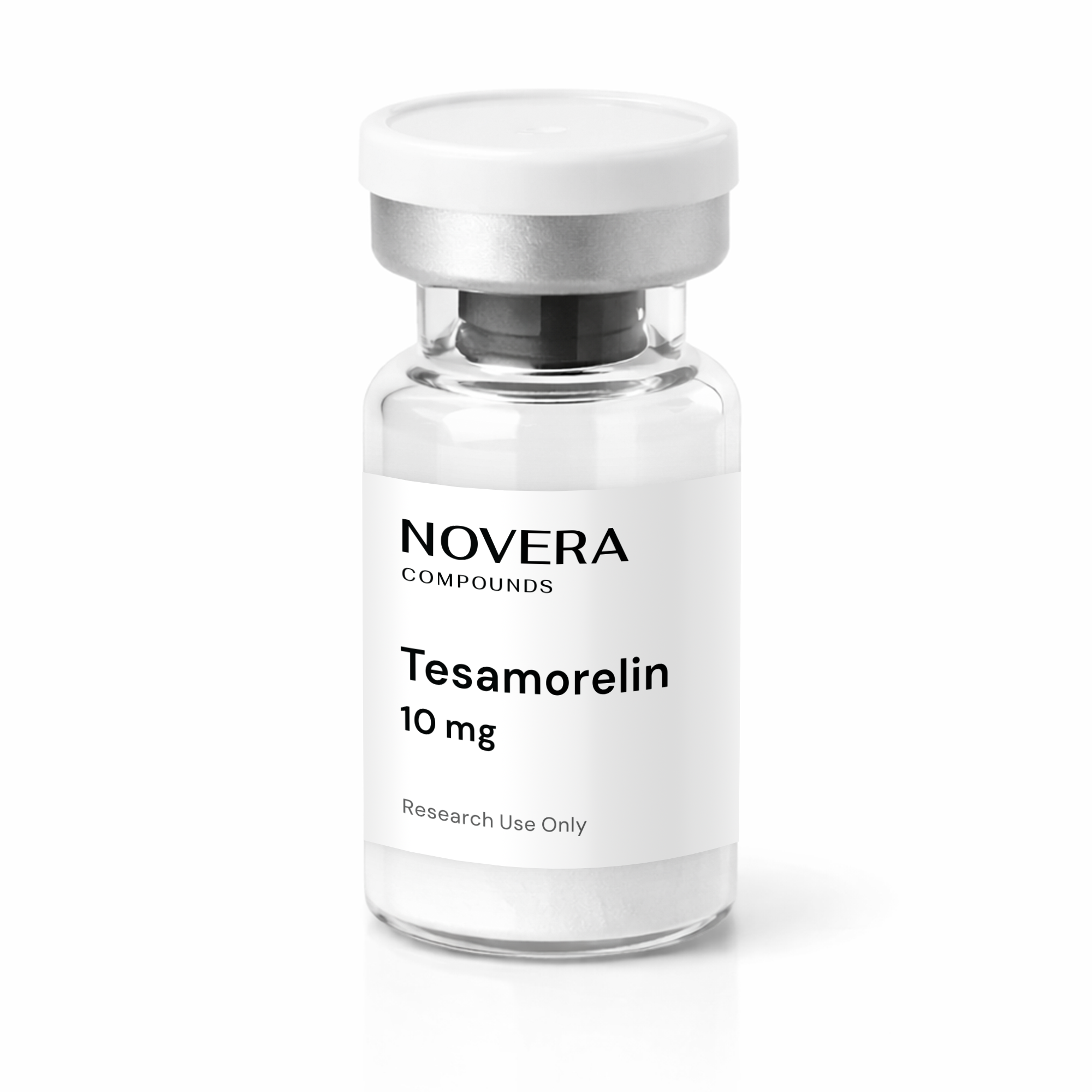
Tesamorelin 10mg
Brand: NOVERA COMPOUNDS
Strength: 10mg
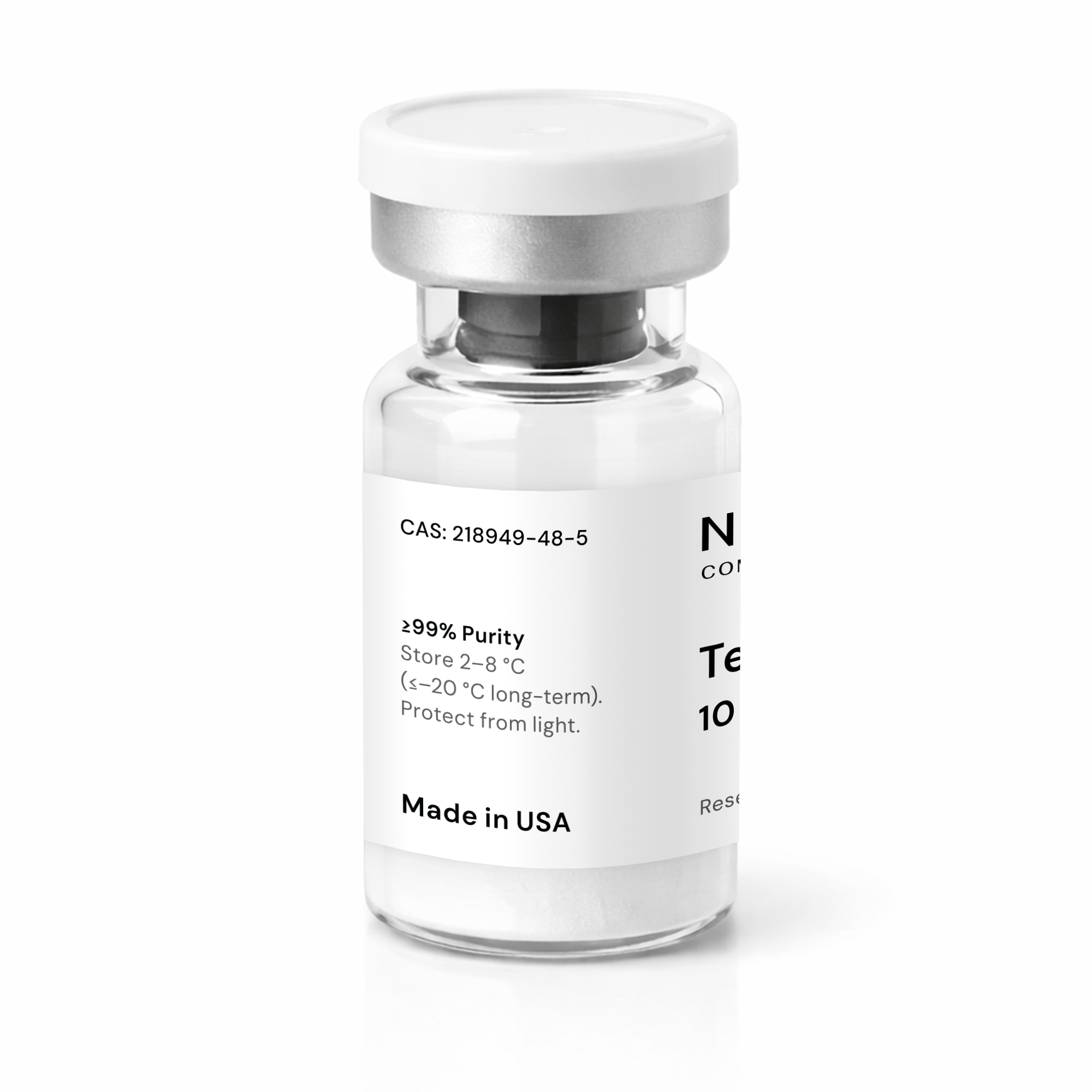
CAS: 218949-48-5
Chemical Formula: C₂₂₁H₃₆₆N₇₂O₆₇S
Molecular weight: 5136 g/mol
Peptide Sequence: Trans-3-hexenoyl-YADAIFTNSYRKVLGQLSARKLLQDIMSRQQGESNQERGARARL-NH2
Synonyms: TH9507
Storage: Store 2–8 °C (≤–20 °C long-term). RT exposure during transport acceptable. Protect from light.
Shelf life: 24 months from the manufacturing date.
$107.00
Contact Us
Tesamorelin is a synthetic analog of growth hormone-releasing hormone (GHRH) designed to stimulate natural growth hormone secretion patterns. Research suggests it may help support growth hormone and IGF-1 levels through its effects on pituitary GHRH receptors. It appears to work by mimicking endogenous GHRH signals to promote pulsatile growth hormone release.
Disclaimer : Available as lyophilized (freeze-dried) powder for laboratory and in vitro research applications. Reconstitution solution is not included in the pack.
Purity ≥99%
Made in USA
Research Use Only
Fast Shipping
Explore Other High-Purity Peptides
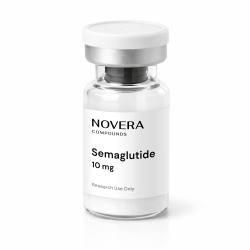
Semaglutide 10mg
$ 138.00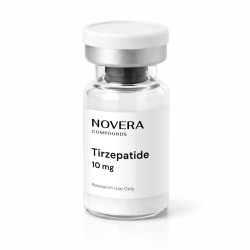
Tirzepatide 10mg
$ 170.00The Novera Compounds Advantage
Made in the USA
Manufactured in the United States under controlled standards. Reliable production. Dependable supply. No overseas uncertainty.
High Purity — 99% or Better
Every batch meets ≥99% purity specifications and is verified by independent third-party laboratory testing. Clean. Consistent. Documented.
Advanced Lyophilized Stability
Carefully lyophilized for structural integrity and easier handling. No cold shipping required. No dry ice. No complications.
Designed for Research
Ideal for scientific study, analytical testing, and research workflows where consistency and quality matter most.
Smart Pricing. Real Value.
High purity. USA-made. Third-party tested. Priced to make sense.
Everything in One Order
Already ordering other products? Add peptides to the same shipment. One vendor. One contact person. Simple.
Product Description
Specifications
Description
Strength: 10mg
CAS: 218949-48-5
Chemical Formula: C₂₂₁H₃₆₆N₇₂O₆₇S
Molecular weight: 5136 g/mol
Peptide Sequence: Trans-3-hexenoyl-YADAIFTNSYRKVLGQLSARKLLQDIMSRQQGESNQERGARARL-NH2
Synonyms: TH9507
Storage: Store 2–8 °C (≤–20 °C long-term). RT exposure during transport acceptable. Protect from light.
Shelf life: 24 months from the manufacturing date.
Tesamorelin (10mg) About This Product
Tesamorelin (10 mg) is a synthetic peptide supplied as a lyophilized powder for controlled laboratory and preclinical research. Tesamorelin is a stabilized analog of endogenous human growth hormone–releasing hormone (GHRH) and is studied for its ability to stimulate endogenous growth hormone (GH) secretion and downstream metabolic signaling pathways.
Structurally, this muscle growth and performance peptide is a 44–amino acid peptide derived from native GHRH, incorporating a modified N-terminus (trans-3-hexenoic acid) that enhances resistance to enzymatic degradation and supports extended functional stability compared with unmodified GHRH.
In endocrine and metabolic research, Tesamorelin (TH9507) has been examined in studies of visceral adipose tissue (VAT), lipid metabolism, hepatic fat content, and the GH/IGF-1 axis. Laboratories that buy tesamorelin peptide commonly use the 10 mg vial format to prepare solutions within dosing ranges evaluated in translational research protocols.
Tesamorelin (10mg) Key Features and Benefits
- Peptide Sequence: Tyr Ala Asp Ala Ile Phe Thr Asn Ser Tyr Arg Lys Val Leu Gly Gln Leu Ser Ala Arg Lys Leu Leu Gln Asp Ile Met Ser Arg Gln Gln Gly Glu Ser Asn Gln Glu Arg Gly Ala Arg Ala Arg Leu NH2
- Peptide Class: Stabilized GHRH analog
- CAS Number: 218949-48-5
- Chemical Formula: C₂₂₁H₃₆₆N₇₂O₆₇S
- Molecular Weight: 5136 g/mol
- Format: High-purity, lyophilized peptide
Tesamorelin (10mg) Mechanism & Research Applications
Tesamorelin acts through the growth hormone–releasing hormone receptor (GHRHR), a Class B G protein–coupled receptor expressed on anterior pituitary somatotrophs.
Receptor engagement initiates:
- Adenylate cyclase activation
- Increased intracellular cAMP
- Protein kinase–mediated phosphorylation cascades
- Regulated gene-expression programs linked to GH synthesis and release
This mechanism supports physiologic, pulsatile GH secretion, preserving endocrine feedback regulation while allowing detailed study of GH/IGF-1 signaling kinetics in experimental systems.
Tesamorelin is supplied exclusively for laboratory research and is used in:
- GHRHR pharmacology: Ligand binding and potency assays
- Second-messenger studies: cAMP-linked signaling and downstream phosphorylation
- GH/IGF-1 axis mapping: In vitro and in vivo pathway analysis
- Endocrine feedback research: Signaling kinetics and regulatory loops
- Metabolic and adiposity studies: VAT, lipid profiles, and hepatic fat metrics
- Exploratory biomarker workflows: IGF-1 and metabolic marker evaluation
Exploratory investigations of cognitive or neurologic outcomes have been reported in limited datasets and are not considered a primary research focus.
Tesamorelin (10mg) Dosing & Observed Effects in Research
Published clinical studies most commonly evaluated 2 mg once-daily subcutaneous dosing over 12 weeks to 12 months. The 10 mg research vial supports dose-response modeling, longitudinal endocrine studies, and preparation of daily-dosing solutions consistent with published protocols.
Visceral Adipose Tissue (VAT) Findings
Across controlled studies, 69–72% of tesamorelin-treated subjects achieved clinically significant VAT reduction (≥8%) at 26 weeks. Mean VAT reductions of 15–20% were reported in responders, alongside consistent increases in circulating IGF-1 reflecting enhanced GH axis activity.
Metabolic Observations
Studies evaluating lipid parameters reported improvements in triglycerides and HDL cholesterol in some populations. Visceral fat reaccumulation was observed following discontinuation, a factor frequently addressed in experimental design and interpretation.
Preclinical and translational research involving Tesamorelin includes:
- Visceral adiposity and lipid biomarker studies
- Endocrine axis research in chronic infection and metabolic models
- GH-mediated metabolic regulation and feedback signaling
- Neuroendocrine biomarker readouts linked to GH/IGF-1 dynamics
Tesamorelin (10mg) Storage, Safety & References
- Lyophilized (unopened):
- –80 °C: Preferred for 1+ year storage
- –20 °C: Long-term stability
- Room Temperature Exposure: Brief periods only during transport
- Reconstitution:
- Use sterile aqueous buffer at pH 7.2–7.4
- Store at 2–8 °C
- Stability 14–30 days, depending on diluent
- Avoid freeze–thaw cycles; single-use aliquots are recommended
- Visual inspection: White powder expected; reconstituted solution should be clear
Handle using standard laboratory precautions, including PPE, and avoid inhalation, ingestion, or accidental injection. Dispose of materials in accordance with institutional and regulatory requirements. Qualified laboratories that order tesamorelin peptide must ensure full compliance with research-use regulations.
References
https://pubmed.ncbi.nlm.nih.gov/18057338/
https://pubmed.ncbi.nlm.nih.gov/22495074/
https://pubmed.ncbi.nlm.nih.gov/25038357/
https://pmc.ncbi.nlm.nih.gov/articles/PMC5633509/
https://pubmed.ncbi.nlm.nih.gov/20943777/
Compliance Notice
This product is intended for laboratory research use only and is not approved for human or veterinary use.
Reviews
There are no reviews yet.