


You must be logged in to post a review.
ID: 25134
Categories: Healing & Regenerative Peptides, Peptides for Research
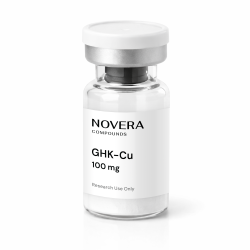
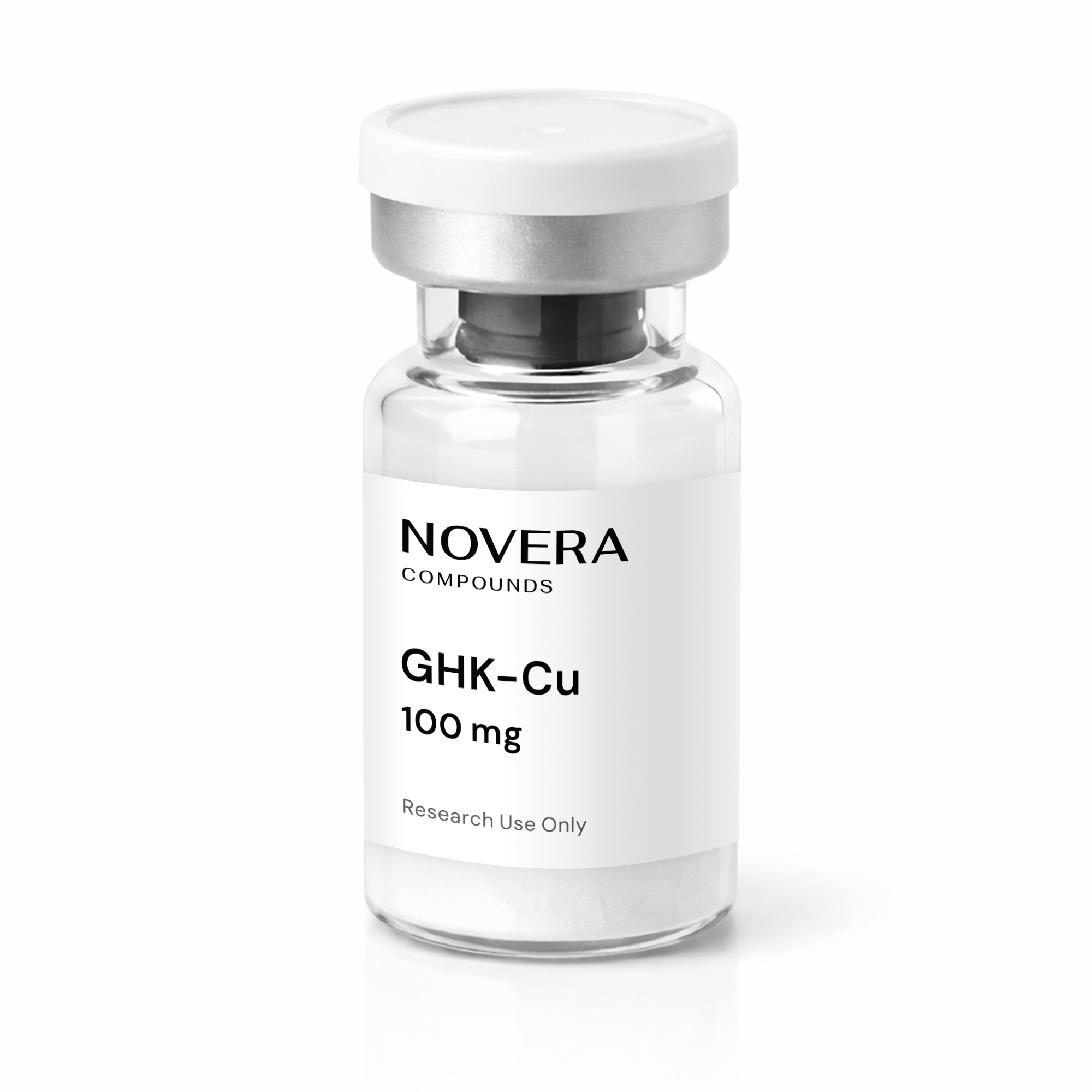
GHK-Cu 100mg
Brand: NOVERA COMPOUNDS
Strength: 100mg
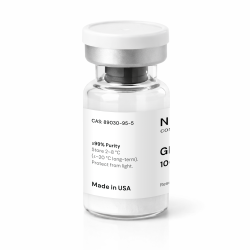
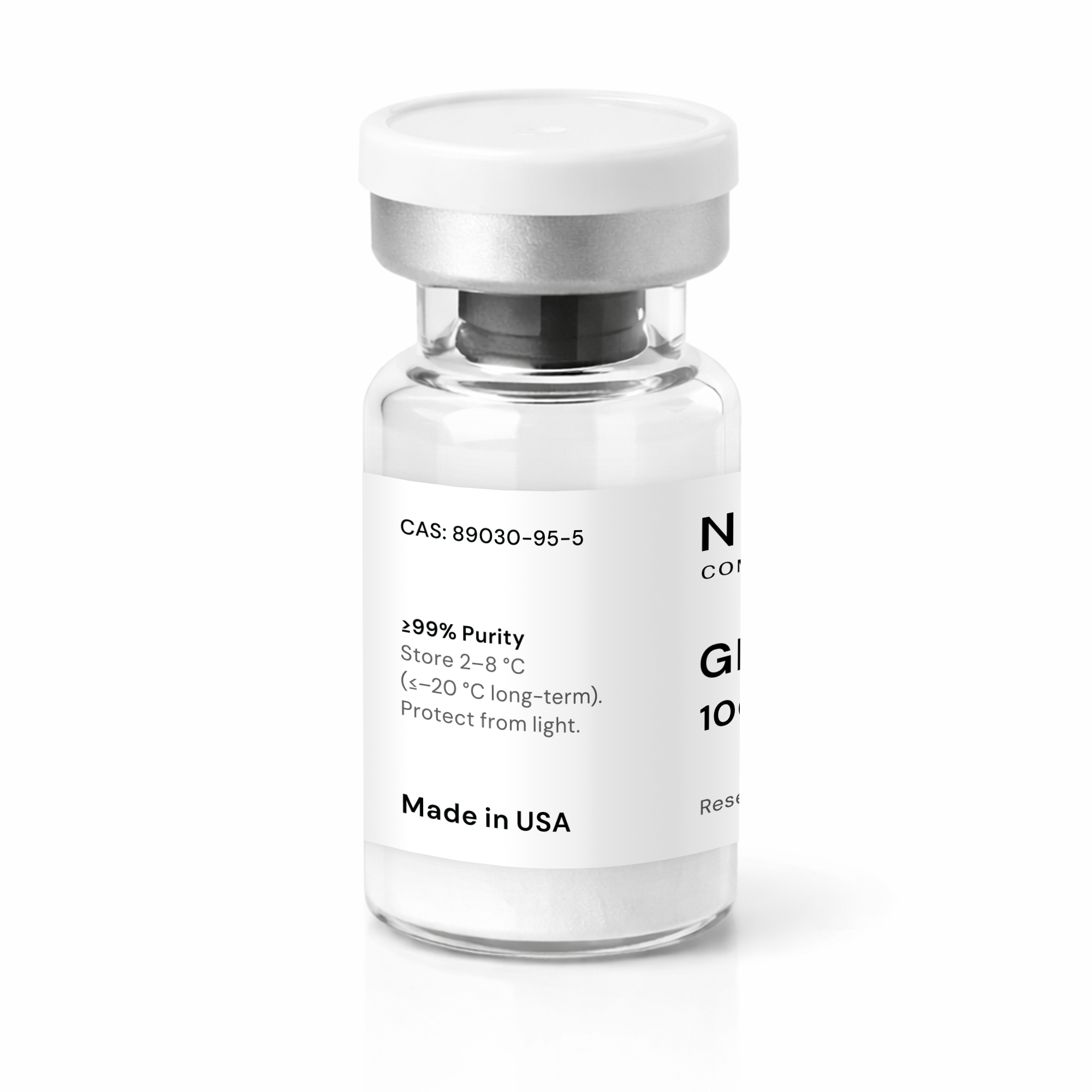
CAS: 89030-95-5
Chemical Formula: C₁₄H₂₁N₆O₄Cu
Molecular weight: 401.91 g/mol
Peptide Sequence: Gly-His-Lys(Cu2+)
Synonyms: Copper peptide, GHK, Tripeptide, ghkcu, GHK-Cu acetate, Gly-His-Lys-Cu(II)
Storage: Store 2–8 °C (≤–20 °C long-term). RT exposure during transport acceptable. Protect from light.
Shelf life: 24 months from the manufacturing date.
$82.00
Contact Us
GHK-Cu is a synthetic copper-bound tripeptide composed of glycine, histidine, and lysine, studied in tissue regeneration and wound healing research. Research suggests that it may influence collagen synthesis, angiogenesis, and tissue remodeling, primarily through copper-dependent enzymatic activation and growth factor signaling pathways involved in extracellular matrix organization and cellular repair.
Disclaimer : Available as lyophilized (freeze-dried) powder for laboratory and in vitro research applications. Reconstitution solution is not included in the pack.
Purity ≥99%
Made in USA
Research Use Only
Fast Shipping
Explore Other High-Purity Peptides
Sermorelin 5mg
Sermorelin 10mg
$ 82.00The Novera Compounds Advantage
Made in the USA
Manufactured in the United States under controlled standards. Reliable production. Dependable supply. No overseas uncertainty.
High Purity — 99% or Better
Every batch meets ≥99% purity specifications and is verified by independent third-party laboratory testing. Clean. Consistent. Documented.
Advanced Lyophilized Stability
Carefully lyophilized for structural integrity and easier handling. No cold shipping required. No dry ice. No complications.
Designed for Research
Ideal for scientific study, analytical testing, and research workflows where consistency and quality matter most.
Smart Pricing. Real Value.
High purity. USA-made. Third-party tested. Priced to make sense.
Everything in One Order
Already ordering other products? Add peptides to the same shipment. One vendor. One contact person. Simple.
Product Description
Specifications
Description
Strength: 100mg
CAS: 89030-95-5
Chemical Formula: C₁₄H₂₁N₆O₄Cu
Molecular weight: 401.91 g/mol
Peptide Sequence: Gly-His-Lys(Cu2+)
Synonyms: Copper peptide, GHK, Tripeptide, ghkcu, GHK-Cu acetate, Gly-His-Lys-Cu(II)
Storage: Store 2–8 °C (≤–20 °C long-term). RT exposure during transport acceptable. Protect from light.
Shelf life: 24 months from the manufacturing date.
GHK-Cu (100mg) – About This Product
GHK-Cu peptide is a copper-binding tripeptide composed of glycyl-L-histidyl-L-lysine (GHK) complexed with a divalent copper ion (Cu²⁺). This peptide–metal complex occurs naturally in human biological fluids, including plasma and saliva, and has been studied for its role in cellular communication, tissue maintenance, and copper homeostasis. Endogenous levels of GHK-Cu decline with age, prompting sustained research interest in aging and regenerative biology models.
GHK-Cu (100mg) is supplied as a high-purity lyophilized powder in sterile vials and is intended exclusively for laboratory research use. Researchers who buy GHK-Cu peptide commonly utilize this format in controlled experimental environments to study extracellular matrix regulation, gene-expression modulation, copper transport mechanisms, and tissue-repair signaling in both in vitro and preclinical models.
GHK-Cu – Key Features and Benefits
- Research-grade purity designed to support consistent and reproducible experimental outcomes
- Stable copper–peptide complex supplied in lyophilized form
- Sterile, sealed vial packaging for controlled laboratory handling
- Extensively studied in tissue remodeling research, including connective tissue and skin models
- Compatible with cell culture systems and animal research models
- Maintains chemical and structural integrity under recommended storage conditions
GHK-Cu Mechanism & Research Applications
GHK-Cu is studied as a bioactive signaling complex that facilitates regulated copper delivery and modulates multiple intracellular and extracellular pathways. Copper functions as an essential cofactor for enzymes involved in antioxidant defense, energy metabolism, angiogenesis, and connective tissue formation. When complexed with GHK, copper uptake appears to be more tightly regulated at the cellular level, making the peptide suitable for mechanistic research.
Researchers who order GHK-Cu peptide commonly investigate its role in the following experimental contexts:
- Extracellular Matrix Regulation: Studied for its influence on collagen, elastin, and glycosaminoglycan synthesis in connective tissue models
- Wound-Repair Signaling: Examined for effects on fibroblast activity, angiogenic signaling, and matrix remodeling under controlled injury models
- Gene-Expression Modulation: Used in transcriptomic studies evaluating changes in genes related to inflammation, oxidative stress response, and cellular growth regulation
Additional investigations explore GHK-Cu interactions with metalloproteinases and antioxidant enzymes, supporting broader research into tissue homeostasis and regenerative biology.
GHK-Cu Dosing & Observed Effects in Research
All dosing information for GHK-Cu peptide is derived strictly from experimental and preclinical research, with protocols varying by study design, model system, and delivery method.
- In vitro studies commonly apply micromolar concentrations to assess cellular proliferation, migration, and gene-expression responses
- Animal research models employ dose-adjusted administration to evaluate localized and systemic biological effects
Reported Research Observations
- Altered expression of genes involved in tissue repair and matrix organization
- Modulation of inflammatory mediators and oxidative stress markers
- Enhanced cellular migration and remodeling activity in experimental systems
There are no standardized dosing guidelines, and no approved clinical safety or efficacy data for human use. All findings should be interpreted strictly within controlled laboratory research frameworks.
GHK-Cu Storage, Handling & Safety
For laboratories planning to buy GHK-Cu peptide, proper storage and handling are essential to maintain compound integrity and ensure reliable results:
- Unreconstituted: Store lyophilized powder at –20°C, protected from light and moisture
- After reconstitution: Store at 2–8°C and use within a protocol-defined timeframe
- Avoid repeated freeze–thaw cycles to preserve peptide–copper complex stability
- Handle using aseptic laboratory techniques and appropriate personal protective equipment
- Dispose of unused material in accordance with institutional and regulatory guidelines
References
https://pmc.ncbi.nlm.nih.gov/articles/PMC6073405/
https://pmc.ncbi.nlm.nih.gov/articles/PMC3359723/
https://onlinelibrary.wiley.com/doi/10.1155/2015/648108
https://pmc.ncbi.nlm.nih.gov/articles/PMC5332963/
https://www.frontiersin.org/journals/pharmacology/articles/10.3389/fphar.2025.1551843/full
Compliance Notice
This product is intended for laboratory research use only. It is not approved for human or veterinary use, and no clinical claims regarding safety or efficacy are made. All applications should comply with applicable laws, institutional policies, and ethical research standards.
Reviews
There are no reviews yet.